HITL Document Review
case study 002
Role
UX/UI Designer alongside UX/UI Lead
Scope
5 months | April '26
Tools
Figma, Figma Make, Stark
Project Type
AI Application
tl;dr
Designing from the data up
We rebuilt our client’s AI-extraction review platform, which was locked to work with a single document type.
Distanced from end users, deeply understanding the data became our proxy for empathy and shaped every design decision we made.
Built to slot into their broader platform suite, the human-in-the-loop (HITL) workflow streamlines how their team moves through AI-extracted documents across any document type.
goals
Establish an extensible and accessible design foundation that is flexible across any document type.
Transform the client’s existing review process to efficiently guide users through AI extractions.
Enable users to quickly identify and resolve extraction errors, guided by AI confidence
The problem
How might we optimize a rigid, document-specific review workflow to scale AI extractions across any document type?
Building from the brief
We started with a foundation of over 60 user stories and documentation that defined confidence scoring as a core part of the technical implementation.
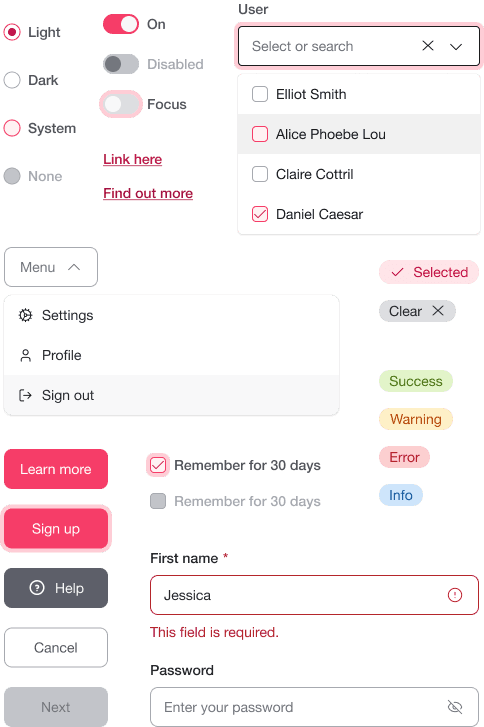
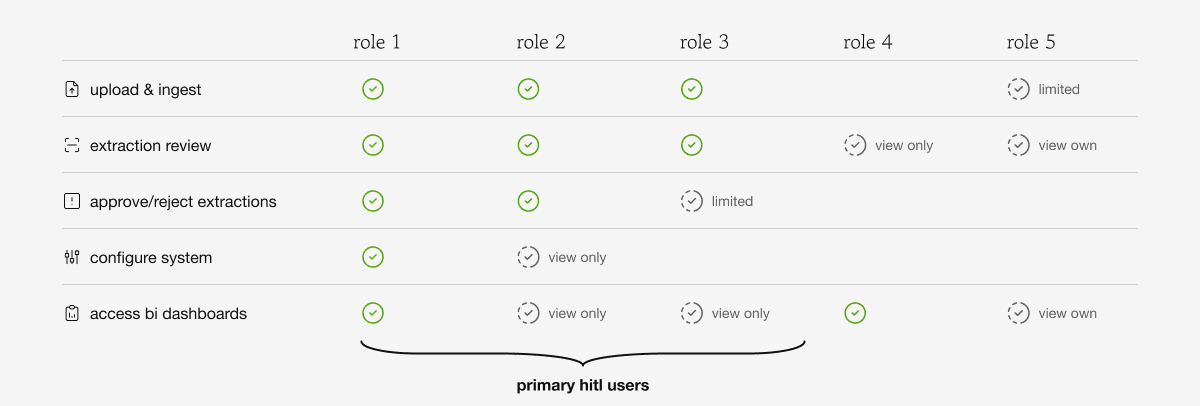
Mapping overlap across five roles consolidated our UI decisions, and the need for flexibility drove us to build a WCAG-compliant component library on top of our internal framework.
Where the brief fell short
The stories defined what the system needed to do, but the data would tell us how users actually worked with it.
Using AI to iterate
Leveraging AI-assisted wireframing allowed us to quickly translate user stories into low-to-mid fidelity screens and adapt to the client's evolving priorities. Using AI, we condensed user stories and technical details into core features and flows, and generated screens using Figma Make.
However, the AI could reflect assumptions about how users worked with the data but could not account for the nuance of the data itself; at that stage, neither could we.
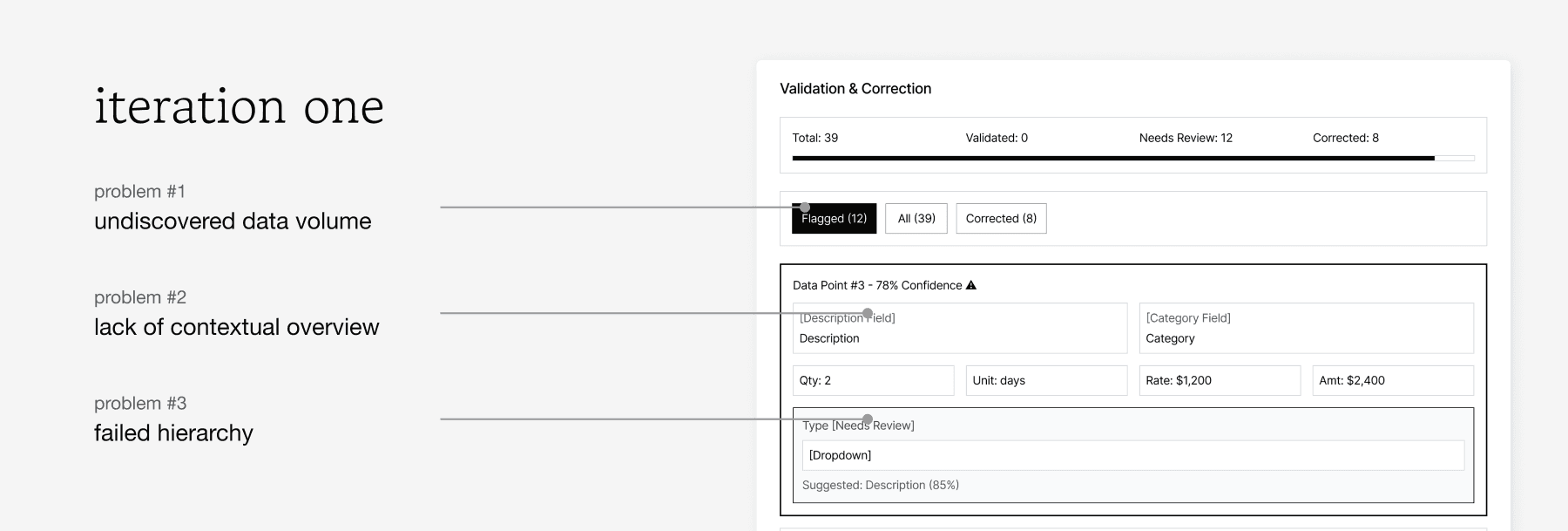
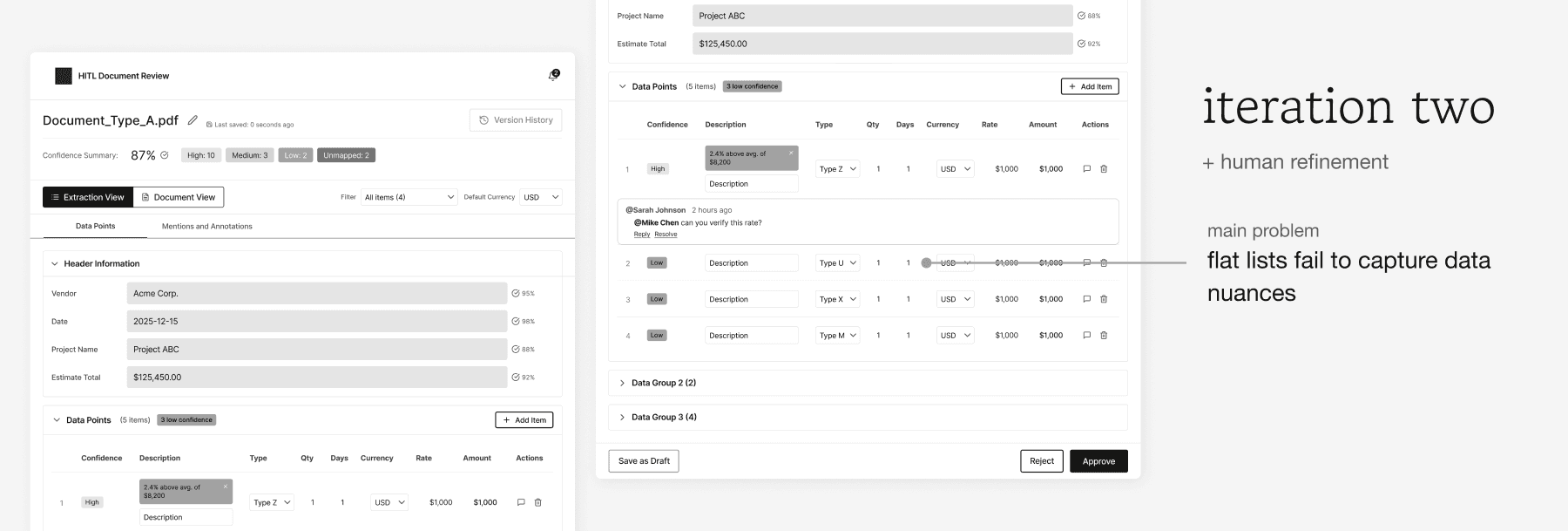
It became clear that moving forward meant wholly understanding the data before the design could progress.
Digging into the Data
Upon digging into the data, we discovered that parent documents could contain hundreds of data points, each with multiple associated and competing child documents. This structure varied across document types, which wasn’t captured by the AI wireframes’ flat list approach, with direct implications for how information would need to be organized.
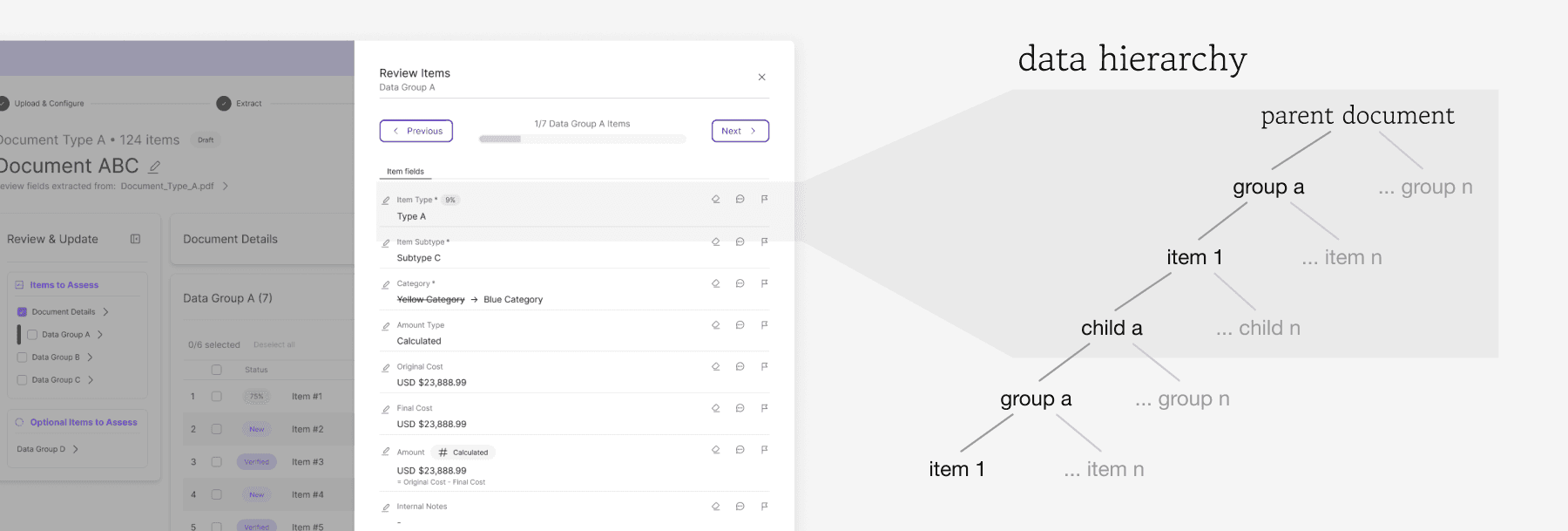
one size fits most
Organizing by data structure limited us in scale, while categorizing document types by workflow allowed us to design layouts for each group with a shared side drawer template that absorbed per-type variation.
We extended this model of adaptability to account for empty fields by establishing that the system would not extract null values, but if a user attempts to save an empty item, they must either complete or delete it.
From Confidence to Clarity
Our initial approach grouped items by confidence score to surface what was necessary to review, but the client flagged that their users weren’t familiar with the concept. That feedback re-framed the problem, and pushed us to rethink the flow entirely.
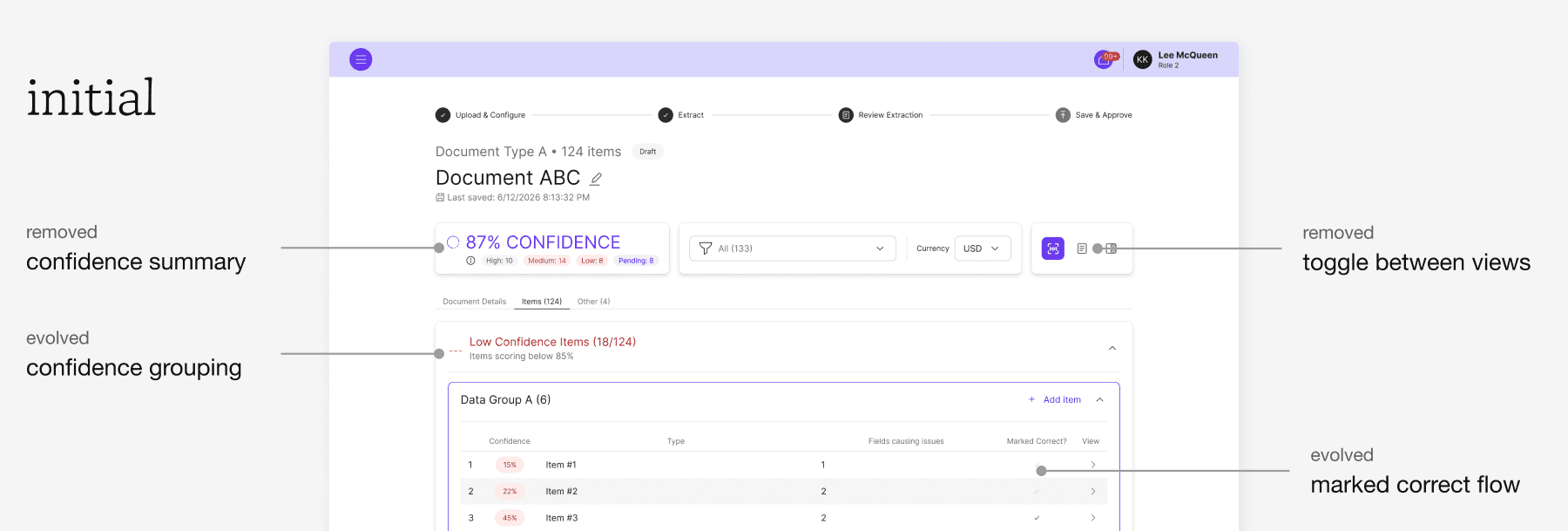
Surfacing What Matters
To address the ambiguity, we introduced module-based grouping as the default. The toggle preserves confidence grouping and allows for a full list view for quick filtering. Side navigation allows users to move directly between sections.
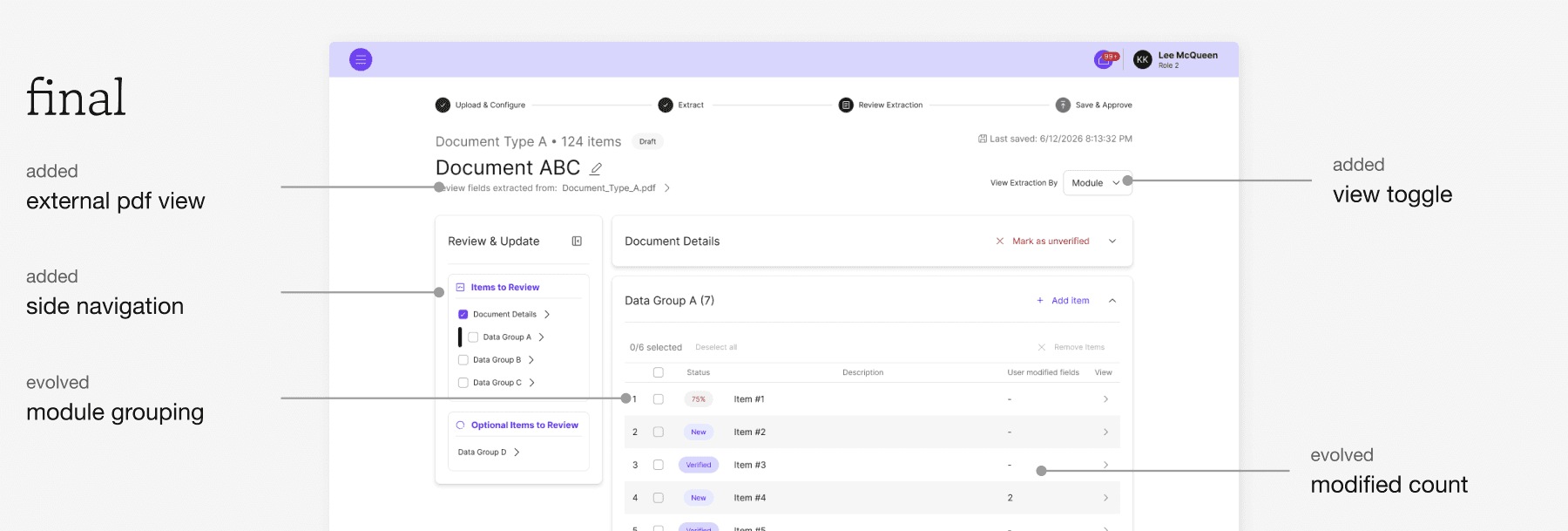
the solution
Designed to replace the client's original tool, the platform is built to let their team assess extractions across any document type with greater efficiency.
Analyze by module or confidence.
Toggle navigation for clearer review.
Verify to clear sections.
Accelerate review with bulk verify.
review & verify across documents.
Revert & revise reviewed data.
data integrity baked into review.
Keeping Humans in the Loop
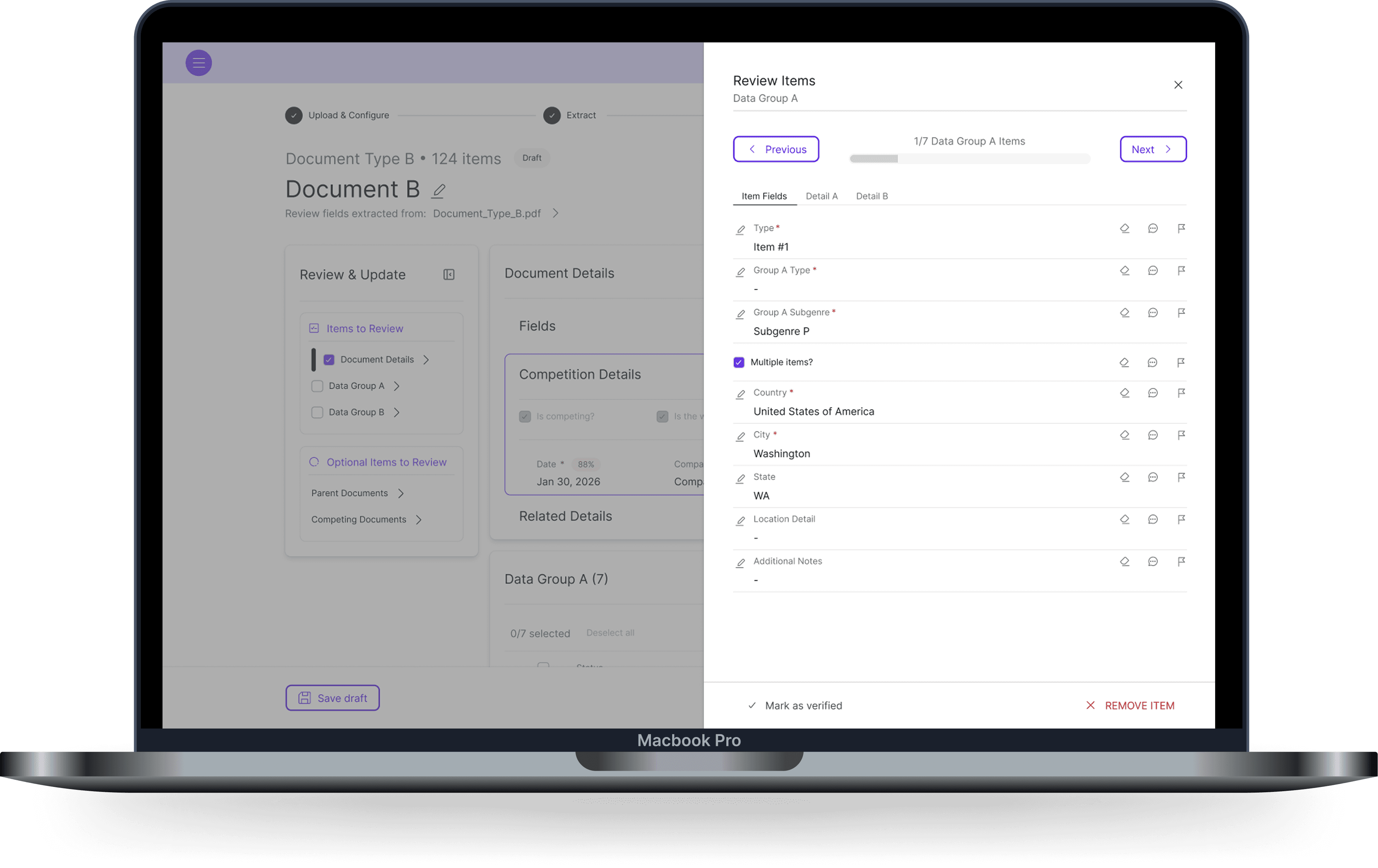
The HITL document review flow provides an experience built to handle complexity without exposing it, and scales with the data to support the full evolution of the platform.
The review flow gives users a structured path through extracted data, with each element mapping to a need that surfaced through feedback and iteration.